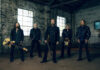
For nearly forty years, Chuck Billy has stood as a central figure in American heavy metal. As lead vocalist and frontman of Testament, his deep roar helped define Bay Area thrash. Yet, behind the music lies a complex story of cultural alienation, youthful recklessness and survival.
The groundwork for documenting Billy’s journey commenced during the 2020 global pandemic, when the band’s touring schedule ground to a halt and gave him the unexpected downtime to reflect.
With his autobiography Holding My Breath: The Two Testaments of Chuck Billy, scheduled for release on November 10, the singer is taking a look back. Prompted by publishers as he neared four decades in the music world, Billy realized he now had the necessary perspective to take the project on.
“I had a few offers to do it in recent years”, Billy stated via a recent phone chat. “I’ll admit that I was hesitant to a point because, for the most part, I’m a pretty private guy. But as I started thinking about it, and the idea came to put my life on paper, I slowly started thinking perhaps now is the right time to tell my story”.
He added. “I thought the idea of splitting the book between “the Old and New Testaments” was a cool approach. I also thought the phrase “holding my breath” for the title was also very fitting, given my stubbornness from when I was a kid”, he laughed.
The shield of size and early awakenings
Born to a Latino mother and a Native American father, Billy grew up off-reservation in Northern California. While this separated him from his culture, it also left him navigating a predominantly white world.
He noted candidly. “I did feel a little alienated in white society to a point. I felt different, and it was as though I was looked upon differently.”
At that time, Billy found his sanctuary playing football. While other teenagers of color in high school faced discrimination, he generally bypassed bullies through his physical presence.
“Yes, my size definitely helped me at the time”, he said. “For the most part, if there was any discrimination against me, it wasn’t really overt like many others had faced”, Billy said.
He grew up in a household of five brothers, a pack of “large barrel-chested athletes”, to quote him directly. Billy was a competitive “rough kid” who usually got his way because he was simply too big to be targeted.
But his athletic goals vanished during his senior year in high school when he was kicked off the team for drinking after a game by his new principal. Stripped of his identity, he redirected that intense aggression toward music.
Before high school though, there was a turning point for him at age 13 that would never leave him. His first “real” rock concert. Billy explained.
“Yeah, when I was 13 or so, I saw KISS in early 1976 on the Alive! tour at Winterland Ballroom in San Francisco. I believe it held around 3000 or so. I went with my cousins, and in fact, my aunt dropped us off”, he recalled.
“I think back now and I realize how crazy it was that parents would just drop off their kids at concerts. In hindsight, it blows me away how different things were then. It really wasn’t uncommon either.”
He continued. “I remember seeing people dressed up as their favorite KISS member, and Gene spitting blood, which some got on my shirt by the way”, he remembered.
Another standout concert moment would come in May 1983 as Billy and some friends attended the US Festival in San Bernardino, CA. They only wanted to see one of the acts from the front of the stage on “Heavy Metal Day”.
NOTE: In case you were wondering good readers, the lineup that day was Van Halen, Scorpions, Triumph, Judas Priest, Ozzy Osbourne, Motley Crue and Quiet Riot. In short, it was Gen X’s equivalent to Cal Jam or Cal Jam II.
Billy recalled. “To be honest, with 300,000 people there, we really only wanted to see Ozzy up close. We were at the front of the stage getting crushed against the barricade. After that, we were more than fine with seeing the other acts from wherever. It was crazy”, he remembered fondly.
Plunging into the exploding San Francisco thrash scene with Testament, Billy experienced an era of chaotic growth. As twenty-something musicians, the band lived with a sense of invincibility, though it was interwoven with tragedy– such as hearing about the death of Metallica bassist Cliff Burton the same day Testament signed its first record deal in Sept. 1986.
That sense of invincibility stopped abruptly in March 2001 when Billy was hit with a rare aggressive cancer known as germ cell seminoma. The diagnosis triggered a frightening realization, as he had carried a dark, lifelong prediction of a specific age. As Billy candidly said.
“The crazy thing about this story is when I was young, I honestly thought that my life expectancy was going to be 38. When I was diagnosed with cancer, I was 38, so it was obviously pretty intense when I got the news”.
Beating the disease required a difficult psychological transition into self-care. For a guy whose identity relied on a commanding physical presence, looking in the mirror post-chemotherapy caused a profound identity crisis. He battled doubts that his career was over. Recovery required Billy to dismantle his old mindset.
He balanced clinical chemotherapy with the spiritual grounding of traditional Native American healing rituals, shifting toward a focused spirituality that kept his mind resilient while his body healed.
Ultimately, his battle became a catalyst for his community. The August 2001 Thrash of the Titans benefit concert organized by his peers reunited classic bands like Exodus, Death Angel and Vio-lence, sparking a 2000s thrash revival, if you will.
Billy concluded, jokingly. “I sort of took one for the team to revive the Bay Area scene, for a few hours anyway. That was the real turning point of that period for me, which is something I’ll never forget”.