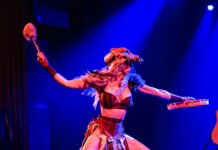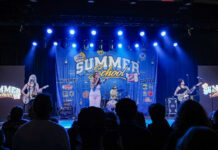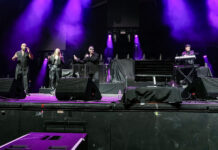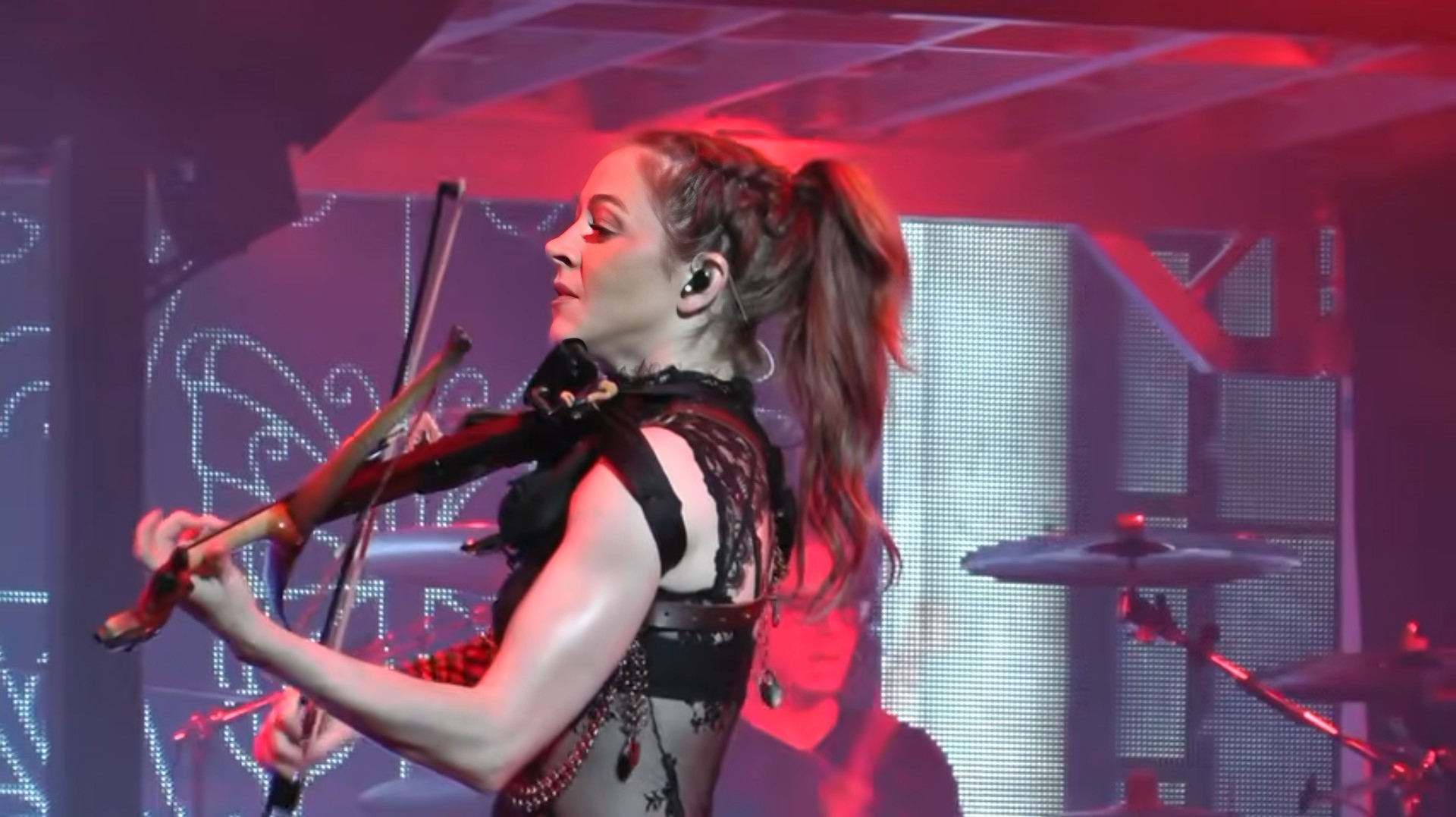
Classical crossover virtuoso Lindsey Stirling brought her high-concept, athletic performance style to Arizona Financial Theatre to a packed house of 4000 strong (according to box office staff) for Stirling’s homecoming performance.
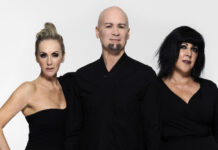
Flanked by solid opening sets by alt-pop band PVRIS and genre-bending string duo ARKAI, this billing put a rare onstage camaraderie on full display. It showcased a mutual artistic respect between the three acts that has arguably become increasingly uncommon on modern-day multi-act tours.
Born and raised in nearby Gilbert, AZ. And an alumnus of Mesquite High School, Stirling delivered an 18-song, 95-minute set. It was mostly an instrumental set that leaned heavily into the emotional gravity of the night. In between hyper-kinetic numbers, Stirling broke character to openly share her gratitude, noting at one point that her mother, Diane Stirling, and members of her first high-school band were in the audience.
That palpable, raw vocal emotion contrasted very well with a performance otherwise built on rigid structural ambition. Stirling’s set kicked off with a rousing, violin-driven take on the Led Zeppelin classic, Kashmir.
The core strength of the night was in Stirling’s specialized hybrid arrangements, which seamlessly stitched disparate musical eras and genres together. The continuous medleys of songs like Sandstorm/Elements and Lost Girls/Shatter Me functioned as masterclasses in pacing.
Essentially, it allowed her to transition from frenetic electronic dance rhythms to soaring, cinematic theatricality without losing melodic cohesion. Not an easy feat I imagine.
Stirling’s landmark track Crystallize maintained its status as a pristine showcase for her signature sound. However, the night’s most striking stylistic pivot was arguably a hyper-kinetic, hybrid mash-up of Roundtable and the Charlie Daniels band 1979 song The Devil Went Down To Georgia.
This arrangement allowed her to juxtapose traditional Celtic and bluegrass fiddle cadences against aggressive modern synthesis. It perhaps pushed her technical precision to its absolute limit while executing complex choreography.
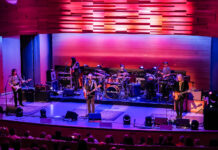
Technically, this performance proudly leaned into Stirling’s overt electronic dance music influences. Backed by guitarist/keyboardist Ryan Riveros and drummer Drew Steen the sonic landscape depended heavily on dense, intricate electronic programming. The front-of-house sound technicians delivered a strong mix, balancing the heavy digital elements without burying the raw nuance and organic acoustic timbre of Stirling’s live violin work.
Having said that, because the entire show was built around highly choreographed visual cues and intricate aerial elements, the structural pacing remained pretty rigid. As a result, it left virtually no room for instrumental improvisation. Perhaps to some fans’ dismay in the audience– especially young up-and-coming musicians that attended the show.
With Stirling’s catalog continuing to increase, the latest studio album being 2024’s Duality, her live shows would arguably benefit from expanding to a 20-song or 2-hour minimum set. Frankly, if any touring artist possesses the sheer physical stamina and artistic drive to execute a performance of that caliber, it is indeed Ms. Lindsey Stirling.
In short, she made the Gilbert community and Arizona proud that night.
The final verdict? 4.5 out of five stars.